Just diagnosed with a brain tumour?
You have just received the most terrifying news — you or any of your relatives have been diagnosed with a tumour in the head or brain. Time after receiving such news is confusing and scary – what will happen next? Brain tumours can be unpredictable and aggressive, but perhaps relatively benign and efficiently treatable. Therefore, if a tumour has been detected in very early stages, the best thing you can do is act immediately. Even though brain tumour diagnosis may cause depression and confusion, and make you feel as if you have lost control over your life, still there are ways you can get out of this mental fog, back to the daylight, and redeem control! Perhaps, you already find yourself in a whirl of emotions, doctor appointments, friend and family visits, and in this never ceasing and puzzling situation you may have a little time to focus on issues related to decisions beyond reasoning, however, these decisions must be made immediately.
Ascertain your health condition — find out the diagnosis and all available treatment possibilities!
Even if you are diagnosed with a brain tumour and you are offered conventional treatments, you can still receive the second opinion from a qualified specialist to confirm the diagnosis and assess the offered treatment plan. Your attending doctor may offer less than all most progressive methods of diagnostics and treatment, because they are not available in that particular hospital or they are not covered by the state budget. If you still have questions about your diagnosis or treatment possibilities after consultation with the attending doctor, search for additional information or reliable healthcare sources or pose these questions to the specialists of Radiosurgery Centre Sigulda
Innovations versus the frightening statistics!
If you or your relative have symptoms that indicate at brain tumour or have recently gone to diagnostics to visualise tumours and determine their location and elaborate the right treatment plan, it is vital to make sure the diagnosis is accurate. Specialists from Radiosurgery Centre Sigulda use possibilities of the most advanced diagnostics and experience of the best neuroradiologists of Latvia. Regardless of the type of tumour you are diagnosed with, it is very important to be aware of the best treatment options. Conventional treatment of tumours in head includes surgical treatment, radiotherapy and medical chemotherapy. You may be offered individual methods or their combination. Nevertheless, other alternative low-invasive methods of treating tumours in head are offered more frequently across the globe. One treatment option that might suit you is robotic radiosurgery with system CyberKnife. Regardless if CyberKnife is used as an alternative to the surgery or in combination with it and other treatment methods, CyberKnife brings new hope to every inhabitant of Latvia! By using microsurgery technologies during surgery and possibility to accurately diagnose brain tumours, chances of patients to survive even in case of relatively aggressive tumours have considerably increased over the last decade. A topical issue here is side effects and neurological defects caused by the surgery. Knowledge and experience of those doctors that take advantage of innovative brain tumour diagnostics and treatment and consultation with such doctors are your best protection against negative survival statistics. Struggle with brain tumour differs from patient to patient. You can listen to recommendations of your friends and family, but eventually the choice is only yours. Admit that it is good to be involved in your treatment plan — it is your health and your decision
Apply for a free online consultation:
Our client consultant will contact you shortly. If you write on weekends or after business hours, we will definitely respond the next day.
If you have any additional questions, please call 20270077
What is brain tumour?
Brain tumour
Not all brain tumours are cancer, but all of them can be dangerous. Brain tumour is a pathological condition of brain and connective tissue cells that start to intensely divide and do not die naturally under influence of different factors. A benign brain tumour is known to grow only from the same cells it is made of, and usually it does not grow into other structures of brain and does not create metastases, however it presses on other structures of brain and tissues and causes oedema. Benign tumours grow slowly and most often they are found due to side effects. Malignant tumours, called also brain cancer, put health at danger, they grow fast and may spread to other parts in brain and spinal cord.
Some facts about brain tumours
• every year approximately 297 thousand people are diagnosed with brain tumours worldwide;
• every year approximately 185 patients are diagnosed with malignant brain tumours in Latvia; unfortunately, there are no records kept regarding the benign brain tumours, and the number could be similar;
• we still do not know precisely why brain tumours appear and why they appear in certain subjects, but we know several factors that favour their development;
• there are more than 120 different variations of brain tumours;
• brain tumours can cause both physical and cognitive side effects that can be permanent or short-term.
Out of more than 297 thousand individuals who will be diagnosed with primary brain tumour this year, approximately 68% of them will have benign tumours. But even benign tumours must be treated.
If you or your relative have been diagnosed with a brain tumour, it is not always a death sentence. Knowing facts about brain tumours and knowing that there are several possibilities of successful treatment, you can regain at least some peace of mind.
We have also good news — due to new treatment techniques, currently there are more brain tumour survivors than ever before!
The causes of brain tumor and why this is happening are still unknown, but we know how to help you!
- After the establishment of the Radiosurgery Center (2015), we have access to the world’s most advanced cerebral metastatic treatment method with the Cyberknife® M6 Robotic Radiosurgery System;
CyberKnife Radiosurgery provides 87-95% local focal control with minimal side effects;
our team consists of experienced, highly qualified specialists (neurologist, neurosurgeon, neurologist-diagnostician, radiologist-therapist and oncologist-chemotherapist, medical physicist, radiologist-assistant) specializing in diagnosis and treatment of head metastases;
each individual case is evaluated by a team of specialists – within the Council of Medical Specialists;
our clients have access to state-of-the-art head tumor diagnostic techniques such as 3 Teslu MR Examination, 64 Layer CT Examination, PET / CT Examination;
our specialists are well-versed in the treatment of brain metastases and have over twenty years of experience in treating them;
our specialists work according to the guidelines of professional associations, using the latest clinical research and experience of leading European clinicians, following a specially developed protocol for the treatment of brain metastases;
the results of patients treated over two years are fully consistent with those of Europe’s leading CyberKnife centers, both in terms of effectiveness and safety;
the main task of our specialists is to offer the best diagnostic and treatment method for your case.Ask and our specialists will help you understand your situation and find the best solution for your case.
- the possibility of local destruction of the metastasis without surgical intervention, irrespective of its location in the brain;
- the possibility of not using classical radiation therapy, which is usually ineffective in renal cancer or melanoma, as these tumors are radio-resistant to all head radiation;
- the possibility of long-term disease control by combining radiosurgery with advanced diagnosis, targeted therapy and rehabilitation;
- the opportunity to maintain quality of life, comfort and possibly work ability.
Experience stories of patients with head tumors
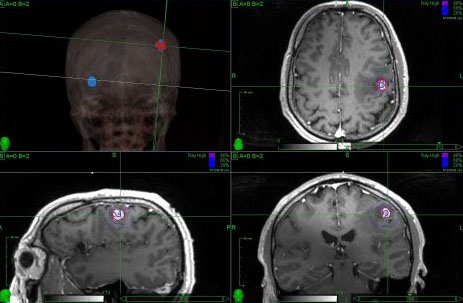
I thought it was a stroke, but they turned out to be metastases
Diagnosis: Renal cancer, condition after nephrectomy. Metastases (3) in brain
Aurimas (53 years), works in a bank in Lithuania (patient’s name has been changed):
“I was hospitalised with symptoms similar to those in case of a stroke — speech and movement disorders. After a MRI scan they found two metastases in my head. It turned out that they have formed from the renal cancer, treated three years ago. I thought I was completely healed, because doctors told so after the kidney surgery. Alas, the disease made its comeback.
Neurosurgeons recommended a surgery, but since it was difficult previous time, I decided to refuse. Doctors told: if you don’t want a head surgery, you can be saved only by radiosurgery. They told that such procedure is available in neighbouring country Latvia, in Sigulda, so I don’t need to take a long trip. Sure, I did not think for a long time. In May 2016, I came for a consultation and already few days later I had that procedure done. During it I had to lay for 60 minutes, while the robot did its work. I had no bad sensations after the procedure. I was going home and thinking — did it really happen? Because it was painless and without anaesthesia. Did they do anything at all? Almost 2 years have passed and I don’t have a stroke and the metastases have also disappeared, but for now I have to take medicines to prevent new metastases from forming.”
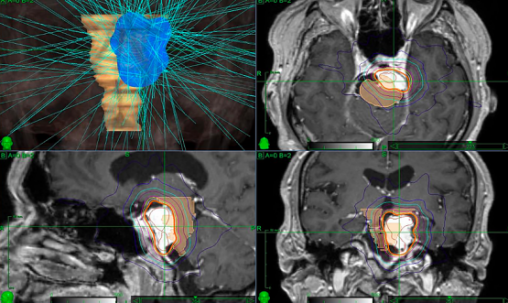
Only a robot was able to save me
Diagnosis: Skull base meningioma
Georg (63 years), company director (patient’s name has been changed):
“I had sudden vertigos and vision went black and then as if doubled in the mornings. A doctor referred me to examinations and a MRI scan revealed meningioma, a benign tumour growing from the meninges. When I met professor and neurosurgeon Igors Aksiks, I was morally prepared for a surgery. But the professor was in doubts and told that it cannot be operated due to very high risk — the meningioma was located very close to the brainstem. Doctor told that a radiosurgery centre is about to be opened in Sigulda and recommended me to wait and go for a treatment there. There was an alternative to take such procedure with CyberKnife in Germany. I decided to wait and be treated in Latvia. I was waiting for two months and I was one of the first patients of the Sigulda Radiosurgery Centre.
What do we offer?
- the opportunity and time to continue working, to live a quality life as if cancer had not existed;
- identical treatment technology and quality results to the best European clinics;
- 2x lower costs than in Germany, UK or elsewhere in the EU;
save time spent on post-operative care and rehabilitation;
receive the attention of our team of specialists before and after therapy; - availability of online and face-to-face consultation, the ability to call a doctor and get an immediate response or solution to a problem
professionalism, understanding and sensitivity; - understandable, predictable costs, with no hidden additional costs.
We recomend to visit the sites for more information:
About the CyberKnife M6 Robotic Radiosurgery Method, more at https://www.cyberknife.com/treatment/radiation-therapy/brain%20tumor
Information on CyberKnife Treatment of Head Tumors in Latvia: https://cyberknife-sigulda.com
Jana Irša
Consultant
Medical Assistant will answer you and help you understand which specialist you need. Read more
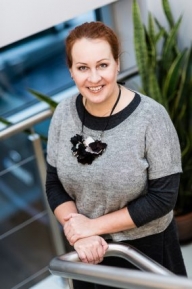
Linda Jurginauska Oncologist chemotherapist
Professional Specialist – Will help in cases where the tumor is already in advanced stage or has returned after the previous treatment. Read more
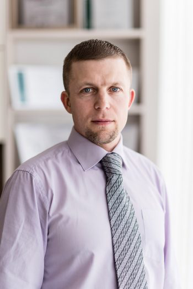
Māris Mežeckis
Radiologist therapist
The most professional and knowledgeable specialist in the treatment of head tumors with the CyberKnife radiotherapy robot. Read more
Sign up for a free online consultation:
Our client consultant will contact you shortly. If you write on weekends or after business hours, we will definitely respond the next day.
If you have any additional questions, please call 20270077
The website audzejs.lv was made by Radioķirurģijas centrs Sigulda.